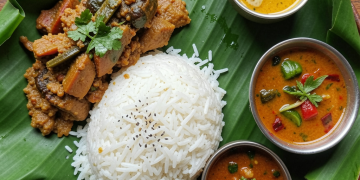


Ayurveda also stresses that how we consume food is as significant as what we consume. The tradition of eating while seated on the floor, which has been a long-standing practice in sanatana dharma and ayurvedic practices, has numerous health advantages consistent with the philosophies of dincharya (daily regimen) and ahara vidhi vidhan (right way of eating) outlined in ancient texts such as charaka samhita and ashtanga hridaya.
– Aids Digestion and Agni (Digestive Fire)
In ayurveda, sukhasana (cross-legged seating) while having meals produces a natural relaxation reflex in the body. The sitting posture facilitates digestion by harmonising apana vata (the downwardly moving energy accountable for excretion) and also ensures correct secretion of digestive fire (jatharagni deepana). The slight leaning forward while consuming food and afterwards resuming erect posture stimulates samana vayu (vital energy managing digestion), such that there is proper metabolism of food.
– Improves Posture and Spinal Health
Sitting on the floor in padmasana or sukhasana preserves the natural curvature of the spine, minimising stress on the lower back and shoulders. Ayurveda lays great stress on upright sthana (posture) for prana vayu (vital energy responsible for respiration and mental processes), ensuring that oxygen is delivered to all the body parts optimally.
– Promotes Conscious Eating (Yukta Ahara)
Ayurvedic traditions recommend eating while being fully focused and in a calm state. Floor sitting induces sattva guna (a state of calmness and clarity), minimises distractions characteristic of eating from a table or in front of the screen. This results in slower consumption, improved chewing, and improved digestion, avoiding disturbances such as ama (toxins resulting from undigested food).
– Balances Energy Flow (Vata, Pitta, Kapha )
Ayurveda instructs that tridosha (vata, pitta, kapha) balance is extremely important for health. Floor sitting balances vata dosha by stabilising the body, avoids pitta imbalance through not eating hurriedly, and increases kapha moderately to aid in nourishment.
– Encourages Healthy Blood Flow and Extended Life
As compared to sitting on chairs, which can cause improper circulation in the legs because of venous compression, sitting cross-legged promotes rakta sanchara (circulation of blood) by facilitating equal distribution of energy. Ayurvedic tradition relates proper circulation to ayushya vriddhi (longevity) and lower chances of lifestyle disorders.
– Muscles and Flexibility are Strengthened
Practice of sitting on the ground daily strengthens the core, increases flexibility in the hips and knees, and promotes healthy joints. In ayurveda, movement is necessary to avert stagnation of kapha dosha and retain lubrication of the joints, preventing sandhigata vata (osteoarthritis).
– Improves Social and Emotional Health
Ayurveda emphasises samskriti (tradition) and sangha (society) to keep one mentally healthy. Food eaten on the floor tends to make one feel more connected with nature and family, promoting emotional stability and heightened ojas (life force energy that provides immunity and vitality).
Eating while sitting on the floor is not only a conventional practice, it is an ayurvedic habit of lifestyle according to ahara vidhi vidhan for effective digestion, prakriti sthapana (balance of body and mind), and overall well-being. Adopting this simple but deep-rooted habit, one can have enhanced digestion, better flexibility, and a stronger bond with the body’s natural rhythm, resulting in holistic health and longevity.