

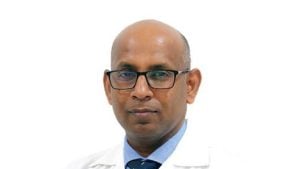
An interview with Dr. Swaminathan Sambandam
Dr. Swaminathan Sambandam, a pioneering liver transplant surgeon, has been at the forefront of liver and kidney transplantation for nearly two decades. Having started his career in the United States in 2006, he returned to India in 2015, determined to elevate the country’s organ transplant ecosystem. In this exclusive conversation, he shares insights on the evolution of liver transplantation in India, the rise of living donor transplants, groundbreaking robotic surgeries, and the future of organ transplantation.
Q: How has liver transplantation in India evolved over the past decade?
Dr. Swaminathan: The transformation has been nothing short of remarkable. When I first returned to India in 2009 after my training in the U.S., there were no established liver transplant centres in Tamil Nadu. The first successful liver transplant in the state was performed at Stanley Medical College Hospital—a government institution—at a time when private hospitals were still skeptical about the feasibility of the procedure.
Back then, the primary challenges were skepticism, inadequate infrastructure, and high rates of infection. Post-operative infection control was a significant concern, leading to lower success rates. However, with advancements in specialised ICUs, better infection management, and improved nursing care, we have seen transplant success rates increase from 80-85 percent a decade ago to over 95 percent today.
Additionally, the shift from cadaveric transplants to living donor liver transplantation (LDLT) has been a game-changer for India.
Q: India is recognised as a leader in living donor liver transplants. What factors have contributed to this success?
Dr. Swaminathan: Unlike Western countries, where deceased organ donation is more prevalent, India has struggled with a chronic shortage of cadaveric donors due to cultural and infrastructural barriers. This has driven the expansion of living donor liver transplantation (LDLT).
LDLT was initially pioneered in Japan and later perfected in Korea and China before gaining traction in India. Today, 70 percent of the liver transplants in my practice involve living donors. The procedure is complex because only a portion of the donor’s liver is removed, requiring precise vascular and biliary reconstruction. However, thanks to advanced surgical techniques and post-operative care, LDLT in India has become as safe and effective as deceased donor transplants.
Q: You have spearheaded one of Tamil Nadu’s largest paediatric liver transplant programs. What makes these surgeries particularly complex?
Dr. Swaminathan: Paediatric transplants demand an extraordinary level of precision. The blood vessels in infants are as tiny as 2-3 millimetres, requiring microsurgical techniques under high magnification. Additionally, children’s immune systems are still developing, making them more susceptible to infections.
Despite these challenges, paediatric liver transplants boast an impressive success rate of 95-98 percent—even higher than adult transplants. One of the biggest advantages is that parental donors are readily available, allowing transplants to be performed before the child’s condition worsens. The most common reasons for paediatric liver transplants are biliary atresia, followed by metabolic and genetic disorders.
Q: You have pioneered robotic kidney transplants, particularly for obese patients. How has robotic surgery transformed the field?
Dr. Swaminathan: Robotic surgery has been a game-changer, particularly for high-risk patients such as those who are obese. Traditionally, kidney transplants require a large abdominal incision, which is more challenging in overweight patients due to deep tissue layers. Robotics allows for a minimally invasive, keyhole approach, significantly reducing complications.
The robotic system provides:
- A magnified, 3D view of the surgical site
- Elimination of hand tremors, ensuring greater precision
- Smaller incisions, leading to less pain and faster recovery
In fact, most of our robotic kidney transplant patients are discharged within 3-4 days. This technique is also a safer and more aesthetic option for younger patients, especially women, who are concerned about scarring.
Q: Is robotic surgery significantly more expensive than traditional procedures?
Dr. Swaminathan: Initially, cost was a barrier because robotic instruments were expensive. However, prices have dropped significantly. Today, a robotic kidney transplant costs only Rs. 75,000 to Rs. 1 lakh more than a traditional procedure. Given the advantages—faster recovery, reduced complications, and improved surgical precision—this price difference is well worth it.
Q: Are robotic techniques being incorporated into liver transplants?
Dr. Swaminathan: While full liver transplants are not yet performed robotically, we have successfully integrated robotic techniques for donor surgeries.
Robotic donor hepatectomy allows us to remove a portion of the liver using minimally invasive techniques. Traditionally, donors had to endure a large L-shaped incision, leading to a 10-day hospital stay. Now, with robotic surgery:
- A tiny incision (smaller than a C-section scar) is used
- Donors start walking the next day
- Hospital stays are reduced to 3-4 days
- Many donors return to work within a week
This is a major breakthrough, making living organ donation far more appealing and less daunting.
Q: What advancements do you foresee in the field of organ transplantation?
Dr. Swaminathan: Organ transplantation has seen remarkable progress in recent years, yet significant challenges remain—particularly in increasing cadaveric organ donation rates. India currently has a cadaveric organ donation rate of just 1.2 per million population, far behind countries like Spain (37 per million) and the United States (38 per million). Tamil Nadu, however, leads the country with a donation rate of 4 per million, a notable rise from 0.8 per million in 2008-09. In 2024, the state recorded 268 cadaveric organ donations.
If India could match the US donation rate within the next one-and-a-half years, it would mean achieving 2,500 cadaveric organ donations annually, effectively eliminating transplant waiting lists. However, a long road lies ahead, as gaps in identifying and utilising potential organ donors persist.
To bridge this gap, hospitals must be trained to proactively identify potential donors and notify the authorities in a timely manner. Grief counsellors play a critical role in supporting families during end-of-life care discussions, encouraging organ donation as a life-saving legacy. Public awareness is equally crucial—countries with high donation rates have well-structured awareness campaigns and streamlined donor systems. In India, this framework still lacks clarity, and strengthening it will be essential for advancing transplantation efforts.
Looking ahead, several key innovations are set to transform the field of organ transplantation:
Tele-robotic surgery: With 5G technology, remote robotic-assisted surgeries will enable expert surgeons to operate on patients across vast distances, eliminating the need for travel.
Multi-organ transplants: Procedures like liver-kidney and pancreas-kidney transplants are becoming increasingly common, offering new hope to patients with multiple organ failures.
Pancreas transplants for diabetes: Type 1 diabetes could be effectively cured through pancreas transplants, particularly when combined with kidney transplants.
Immunosuppressant-free transplants: Cutting-edge research is exploring ways for the body to naturally accept transplanted organs without the need for lifelong immunosuppressant medications.
India is already a global leader in living donor liver transplants and is making rapid advancements in robotic-assisted surgeries. As surgical techniques, post-operative care, and immunosuppressive therapies continue to evolve, India is poised to be at the forefront of transplantation medicine, offering new hope to thousands of patients waiting for life-saving organ transplants.
“With better training, infrastructure, and collaborative efforts, we are set to achieve even greater milestones in organ transplantation,” concludes Dr. Swaminathan.
Dr. Swaminathan Sambandam is a senior consultant and head, department of liver and multi-organ, transplant and HPB surgery, Kauvery Hospitals (Chennai/Trichy/Salem/Hosur/Tirunelveli)