
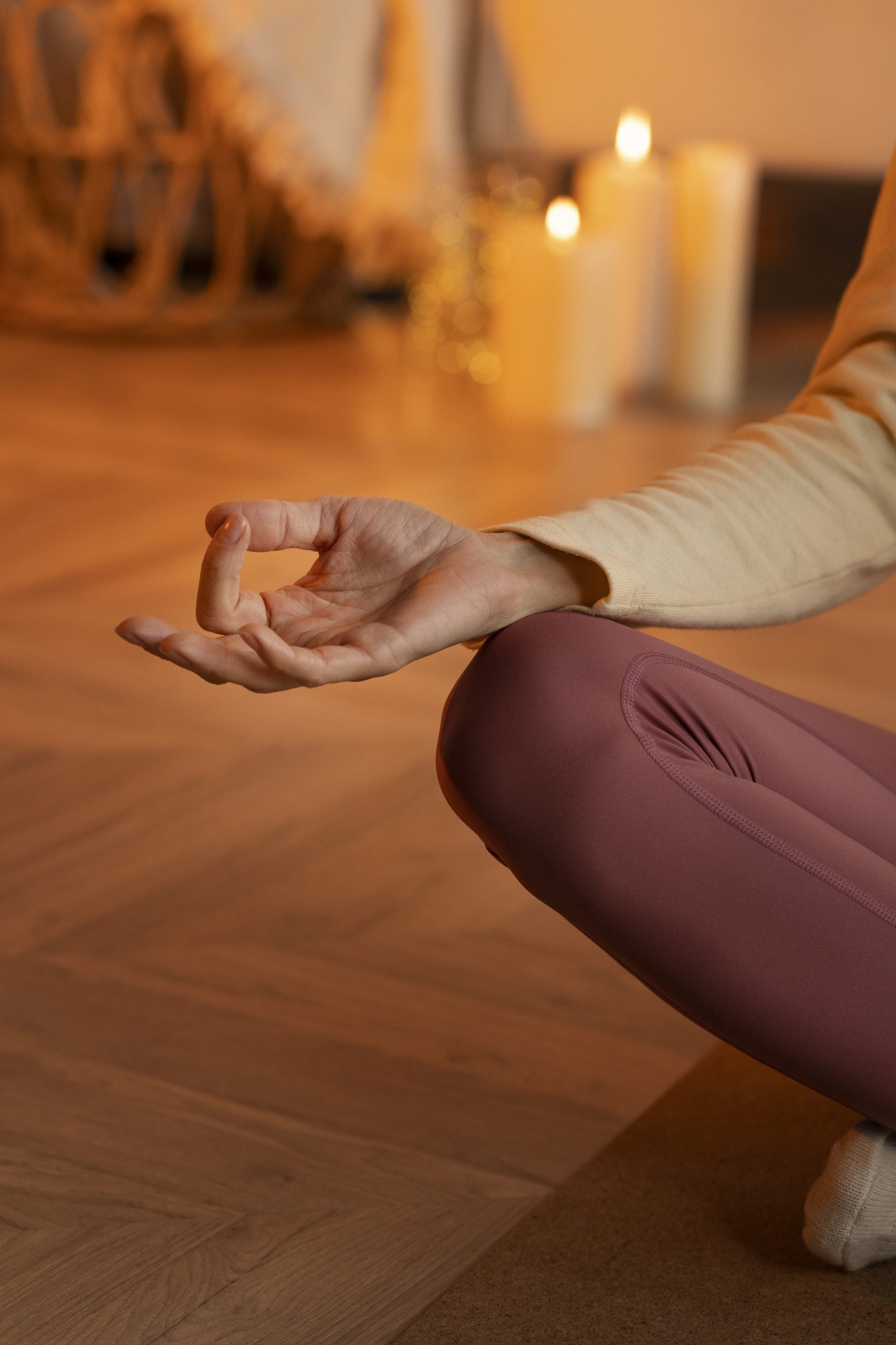
Yoga is a profound practice that goes beyond physical postures or asanas. Integral to yoga is the practice of mudras—subtle gestures that channel the body’s energy in specific ways. These mudras are based on the ancient belief that the human body is composed of and regulated by the five elements of nature: fire, air, space, earth, and water. An imbalance among these elements is thought to lead to various physical and mental ailments. By practicing yoga mudras, one can harmonize these elements, connecting the body’s energy with the universal life force and promoting overall well-being.
The Five Elements and Their Representation:
Thumb: Represents fire
Index Finger: Represents air
Middle Finger: Represents space
Ring Finger: Represents earth
Little Finger: Represents water
Gyan Mudra: The Gesture of Knowledge
Gyan Mudra is one of the most recognised and powerful mudras in yoga. To perform this mudra, sit comfortably with your hands resting on your knees, palms facing upwards. Gently touch the tip of your index finger to the tip of your thumb, while keeping the other three fingers extended. This mudra is a potent combination of the air and fire elements, which enhances mental clarity, improves focus, and reduces anxiety and depression. Regular practice can also bring about a sense of calm and positive emotions, making it an essential mudra for meditation and concentration.
Namaste Mudra: The Gesture of Reverence
The Namaste Mudra, often used as a greeting, carries deep symbolic significance. By bringing the palms of both hands together in front of the chest, the energy and elements from both sides of the body are harmonised, creating a sense of balance and unity. This mudra provides immediate relief from stress and tension, calming the mind and fostering a sense of inner peace. It is a simple yet powerful way to ground oneself and connect with others and the universe.
Vayu Mudra: The Gesture of Air
Vayu Mudra is specifically designed to balance the air element within the body. To perform this mudra, fold the index finger so that its second phalanx touches the base of the thumb, while the thumb gently presses down on the folded finger. The other fingers remain extended and relaxed, with the palm facing upwards. This mudra is particularly beneficial for alleviating digestive issues such as gas, bloating, and constipation. It also helps relieve chest pain and other ailments related to an imbalance of the air element.
Dhyana Mudra: The Gesture of Meditation
Dhyana Mudra is a fundamental mudra used in meditation practices. In this mudra, place the right hand over the left hand, with both palms facing upwards, and touch the tips of the thumbs together. This gesture symbolises the balance between the fire element (represented by the thumbs) and the other elements, promoting mental focus and tranquillity. Dhyana Mudra is particularly effective in helping individuals manage and overcome mental health challenges such as depression, anxiety, and phobias. It is a powerful tool for gaining control over the mind and achieving a state of deep meditation.
Prana Mudra: The Gesture of Life Force
Prana Mudra is known as the gesture of life, as it activates and balances the life-sustaining energy within the body. To perform Prana Mudra, join the tips of the thumb, ring finger, and little finger together while keeping the other two fingers extended. The palms should face upwards during this practice. Prana Mudra is highly effective in improving blood circulation, lowering blood pressure, enhancing vision, supporting digestive health, and strengthening the immune system. It is a vital mudra for revitalising the body’s energy and promoting overall health.
Incorporating these yoga mudras into your daily practice, especially in conjunction with yoga asanas, can lead to profound physical, mental, and spiritual benefits. By balancing the elemental forces within the body, these mudras help maintain harmony and well-being, making them a powerful tool in the journey toward holistic health.